
Have you ever built a beautiful tower out of building blocks, only to have someone accidentally knock it over? Or maybe you lost a favorite toy, a beloved pet, or moved away from your best friend.
When bad things happen, it feels like a giant storm has swept through your world. You look around, and all you can see are the missing pieces. It is completely normal to feel sad, angry, or confused.
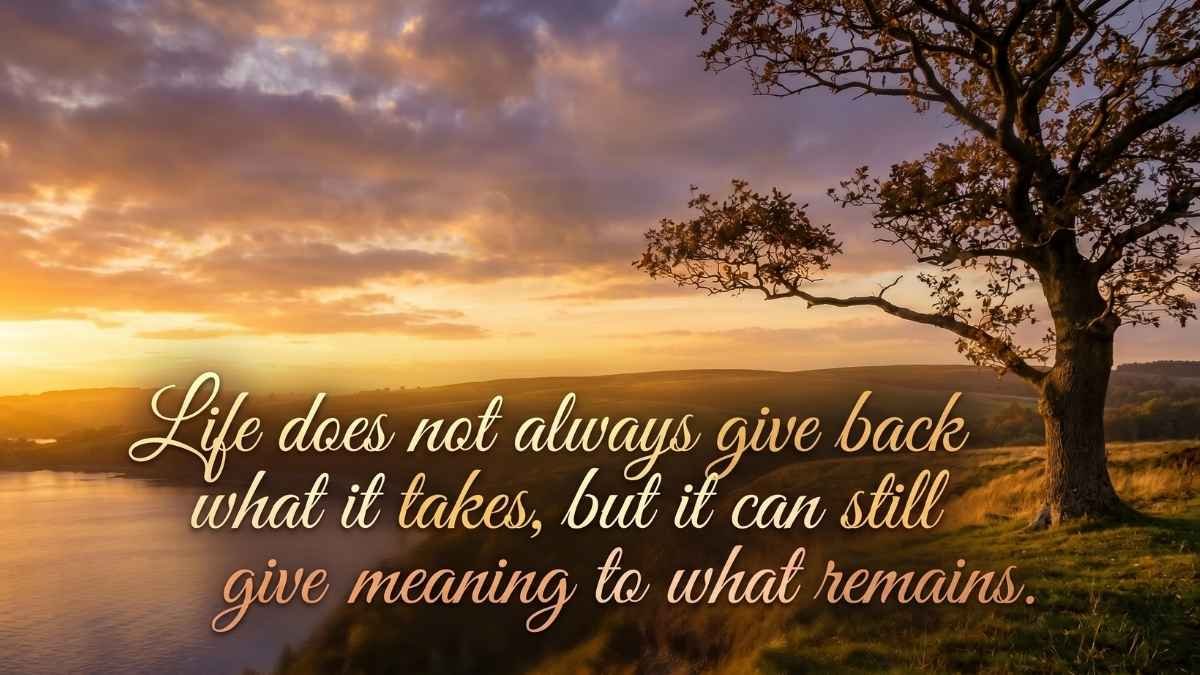
But there is a secret about life that the wisest teachers have known for thousands of years: Life does not always give back what it takes, but it can still give meaning to what remains.
“To bestow on them a crown of beauty instead of ashes, the oil of joy instead of mourning.” — Isaiah 61:3
- The simple meaning: When a campfire goes out, all that is left behind is grey, dusty ash. This verse is a promise that the universe doesn’t look at your leftover ashes and see “garbage”—it looks at them as the exact raw clay needed to sculpt something beautiful. To the Earth, ash is not “garbage.” Ash is super-food for the soil. When the rain finally falls on that ruined forest, the grey ashes dissolve into the dirt and pack it full of rich vitamins. Because of those leftover ashes, the very next spring, the greenest, strongest baby trees pop up out of the ground. The old forest had to turn into ash so the new forest had the food to grow.
What this means for a person:
The “Fire” is the sad thing that happened to you (a big mistake, losing a friend, or a plan failing).
The “Ashes” are the heavy, tired, empty feelings you are left sitting in once the bad thing is over.
The Bible verse is God saying: “Do not look at your leftover sad feelings and say ‘My life is ruined.’ I look at those leftover feelings and say ‘Perfect. This is the exact super-food I am going to use to grow a stronger version of you.'”
If you want to give meaning to what remains, you have to shift your eyes away from the empty spaces and look closely at what is still right in front of you.
In this article, we will explore this beautiful truth through the ancient wisdom of the Bhagavad Gita. We will also learn three simple, highly actionable techniques that anyone—from a young child to a grown adult—can use to turn sadness into unstoppable strength.
Understanding the Great Law of Change
To understand how to give meaning to what remains, we first need to understand how the world works. Imagine watching a tree throughout the year. In the summer, it is full of bright green leaves. In the autumn, the leaves turn red and gold, and eventually, the cold winter wind strips the tree entirely bare.
Does the tree cry because its leaves were taken away? No. It rests. It holds onto its strong roots underground, knowing that spring will come again.
The Bhagavad Gita, one of the oldest and most beautiful holy scriptures in the world, teaches us that human life is exactly like that tree.
The Winter and Spring of Life (Chapter 2, Verse 14)
In the Bhagavad Gita, Lord Krishna speaks to his friend Arjuna, who is going through the hardest moment of his life. Arjuna is overwhelmed by grief and fear. Lord Krishna gives him a gentle, comforting piece of advice:
“Mātrā-sparśhās tu kaunteya śhītoṣhṇa-sukha-duḥkha-dāḥ āgamāpāyino ’nityās tān titikṣhasva bhārata” (Bhagavad Gita 2.14)
What this means in simple words: “Happiness and sadness come and go, just like the winter cold and the summer heat. They are temporary. You must learn to endure them patiently.”
Think about this for a moment. When it rains heavily outside, do you panic and think the sun has died forever? Of course not! You put on a raincoat, open an umbrella, and wait for the storm to pass.
Loss is just an emotional storm. It takes things away, but it cannot stop the sun from rising again tomorrow. When you remember that bad times are only temporary, you automatically start to give meaning to what remains. You begin to look for the sunlight behind the dark clouds.
You Are Stronger Than Your Clothes (Chapter 2, Verse 22)
Sometimes, what life takes away feels so big that we feel like we have lost a part of ourselves. But the Gita shares another incredible secret about who you truly are.
“Vāsāṁsi jīrṇāni yathā vihāya navāni gṛhṇāti naro ’parāṇi tathā śharīrāṇi vihāya jīrṇāny anyāni saṁyāti navāni dehī” (Bhagavad Gita 2.22)
What this means in simple words: “Just as a person takes off old, worn-out clothes and puts on new ones, the soul leaves behind old situations and bodies to enter new ones.”
Imagine you are playing outside in your favorite shirt, and you accidentally tear it on a branch. The shirt is ruined. But are you ruined? Did you disappear because your shirt tore? No! You are the person wearing the clothes, not the clothes themselves.
Everything you lose in life—money, toys, a house, or a specific job—is just like a piece of clothing. When life takes them away, your core self—your soul, your kindness, your ability to love, and your power to think—stays completely unharmed.
You are still whole. And because your true self is still intact, you have all the power you need to give meaning to what remains.
3 Simple Techniques to Give Meaning to What Remains
Ancient wisdom is wonderful, but how do we actually use it when we are feeling down on a Tuesday afternoon? How do we take action right now?
Here are three unique, super-simple techniques that will instantly help you give meaning to what remains. You can practice these easily, no matter your age.
Technique 1: The Magic Seed Bowl (The Resource Audit)
When we lose something, our brain gets stuck in a “subtraction trap.” We keep counting what is missing: 5 minus 3 equals 2. We stare at the empty space where the “3” used to be.
To break this trap, we need to play the Magic Seed Bowl game.
How to do it:
Get a real bowl and a small handful of beans, pebbles, or marbles.
Sit down and name one thing you still have for every pebble you drop into the bowl.
Do not list big, fancy things. List real, basic things you control. For example: “I have my health. Drop. I know how to read. Drop. I have a brilliant imagination. Drop. I have a family member who hugs me. Drop. I have a pencil and paper. Drop.”
“Unless a kernel of wheat falls to the ground and dies, it remains only a single seed. But if it dies, it produces many seeds.” — John 12:24
Look into your bowl. Those pebbles are not ‘leftovers’ from a broken life. They are kernels of wheat. If a farmer loses his entire crop to a flood..
The Simple Lesson: Look into your bowl. Those pebbles are not “leftovers” from a broken life. They are seeds. If a farmer loses his entire crop to a flood, but finds five healthy seeds in his pocket, does he throw them away? No! He plants them. He knows that five tiny seeds can grow into an entire forest.
Stop looking at your remaining assets as leftovers. Treat them as the seeds for your brand-new garden. This is the fastest way to give meaning to what remains.
Technique 2: The Helping Hand Turn (The Dharma Pivot)
Have you ever scraped your knee, and then a week later, you saw a younger friend scrape their knee in the exact same spot? What did you do? You probably ran over, gave them a bandage, and said, “Don’t worry, it hurts a lot right now, but it gets better in two days!”
That is called the Helping Hand Turn. In the holy scriptures, this is known as Seva (selfless service) and living your Dharma (your right purpose).
How to do it:
Think about the sad thing that happened to you.
Ask yourself: “What did this sad thing teach me that can help someone else?”
Take action. If you failed a test, use your leftover study notes to tutor a friend. If you felt lonely, look for the quietest kid in the room and sit next to them. If your business project failed, write a simple blog post warning other creators about the mistake you made.
The Simple Lesson: When you keep your pain to yourself, it feels like a heavy rock in your backpack. But the moment you use your past pain to help someone else, that rock turns into gold.
Your loss is no longer just a bad thing that happened to you; it becomes a valuable lesson that saves someone else from getting hurt. You give meaning to what remains by becoming a hero for someone else.
Technique 3: The Video Game Player (The Sakshi Shift)
When you are playing a video game and your character loses half of their health bar or drops their best sword, do you start crying and throw the TV out the window?
No! You sit up straighter, look at the screen carefully, and say, “Okay, I only have three hearts left and a wooden shield. How do I beat this boss with what I have?”
In the Vedic scriptures, this is called Sakshi Bhava—the practice of being the Silent Witness. It means looking at your life from the outside, just like a video game player watching a screen.
How to do it:
When you feel completely stuck and sad, close your eyes and pretend you are floating up to the ceiling, looking down at yourself.
Talk about yourself using your name, not the word “I”.
Ask the ultimate strategist question: “Look at [Your Name] sitting there. They just had a really tough day and lost something important. But look at what is still on the table. What is the smartest, coolest next move [Your Name] can make right now?”
The Simple Lesson: When you say “I am ruined,” your emotions take over and blind you. When you step back and say, “The main character took damage, but the game is still on,” your brain instantly calms down.
You stop feeling sorry for yourself and start solving the puzzle. You preserve your energy and naturally give meaning to what remains by focusing purely on the next positive action.
Why We Must Keep Moving Forward
It is scientifically proven that our minds grow stronger when we face difficult challenges and choose to adapt. Sages and modern scientists actually agree on this!
According to research shared resilience is not something you are born with—it is like a muscle that you build by choosing to focus on positive actions after a stressful event.
When you practice the Gita’s teachings and the three techniques above, you are literally exercising your resilience muscle.
A Quick Summary for Your Journey
Let us do a quick recap of how you can transform your life starting today. If you want to dive deeper into building good daily habits, you can check out our other guide on mastering your daily routine for success.
Remember the Seasons: Loss is just winter. Spring is already on its way.
You Are the Wearer: You are the soul, not the torn clothes. Your inner power cannot be destroyed.
Count Your Seeds: Put your remaining assets in a magic bowl and treat them as raw materials for your next great build.
Help Another Scraped Knee: Turn your personal pain into a comforting guide for someone else.
Play the Game: Zoom out, look at your life board like a master chess player, and make your next smart move.
Conclusion: Your Next Clear Action Step
“Life does not always give back what it takes, but it can still give meaning to what remains.”
This quote is not just a pretty sentence; it is an instruction manual for a powerful life. It tells us that we are the authors of our own story. Life hands us the paper and the ink, but we choose what words to write on the page.
If you are reading this right now and feeling the weight of a recent setback, take a deep breath. Acknowledge the missing pieces, but do not unpack your bags and live in the empty space.
Your immediate, actionable next step: Grab a blank piece of paper right now. Do not wait for tomorrow. Draw a line down the middle. On the left side, write down the storm that just happened. On the right side, write down three healthy seeds you still possess.
Pick one of those seeds, water it with a positive action today, and watch how quickly you give meaning to what remains. The world is waiting for your beautiful new garden to grow!